Rosetta Stone Sapphire
- 4.5
- Rating
- 50.00K
- Installs
- Free
- Price

 Analysis by App-foxy
Sharing a language-learning app at home sounds simple until different people want different things from it. One person may be preparing for a trip, another may be brushing up on schoolwork, and someone else may only have ten spare minutes before dinner. I found Rosetta Stone Sapphire most useful in that kind of mixed household because it keeps the focus on learning and speaking rather than turning the phone into a complicated family-management project.
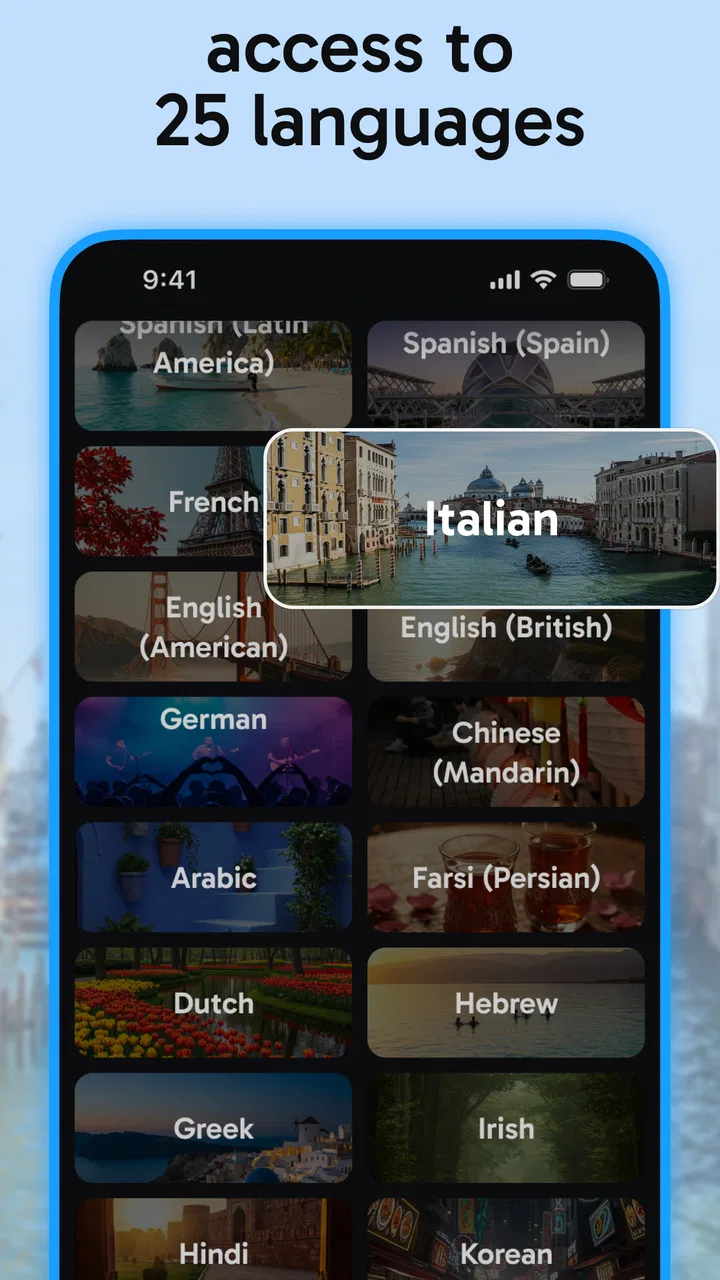
This is an education app from Rosetta Stone Ltd, aimed at learning and practicing English, Spanish, French, German, Chinese, and Japanese. It is free to install, rated for Everyone, and currently listed as version 1.0.11 for devices running Android 10 or later. Its store presence is still relatively modest, with over ten thousand installs, but the average rating sits at 4.4 from nearly one hundred ratings. Those figures suggest a small but generally positive early audience rather than a long-established mass-market tool.
How Rosetta Stone Sapphire fits into a shared household
My first practical test was not a dramatic study session; it was the sort of ordinary evening when several people use the same tablet. A parent might complete a short lesson in Spanish, hand the device to a teenager working on French pronunciation, and leave the tablet available for another learner afterward. That arrangement can work, but only when everyone treats the app as a personal learning space rather than a communal game where progress is casually mixed together.
You May Also Like

 Pandora - Music & Podcasts
Pandora’s Music Is Easy to Start, but Harder to Recover
Pandora’s strength is its low-effort path from a seed to a station. Its weak spot is how much confidence it asks you to place in connection, setup, and quiet recovery.

 8 Ball Pool
 Is Built on Rivalries, Rematches, and Routine
A close look at the rivalries, rematches, shared routines, and unanswered safety questions that turn a quick pool match into a persistent mobile community.

 Samsung Music
’s Quiet Strength Is Playing What You Already Own
Its reach comes less from spectacle than from dependable access to a personal library. That simplicity is both the app’s strongest retention engine and its ceiling.

 AccuWeather: Weather Radar
AccuWeather Review: A Quick, Clear Forecast for Everyday Decisions
For everyday plans, the best forecast is the one you can understand quickly. AccuWeather makes rain timing, radar, and local conditions easy to act on, with a few trade-offs.

 Hill Climb Racing
Why Hill Climb Racing Still Turns Crashes Into One More Run
A tiny car, a bumpy hill and one more upgrade: Hill Climb Racing keeps resurfacing because its simple chaos makes every near-miss feel personal.

 AliExpress - Shopping App
AliExpress Makes Global Shopping Feel Personal, but Shoppers Bear the Risk
AliExpress turns a global marketplace into a pocket-sized discovery engine. Its reach is useful, its shopping loop compelling, and its trade-offs easy to miss.
More From Our News Desk
View All News


The app’s strongest household use case is parallel learning. Each person can approach a different language with a different goal: travel phrases, school reinforcement, conversational confidence, or simply a structured introduction. I would not recommend passing the device back and forth while someone is halfway through an exercise, though. Language practice depends on concentration, and interruptions make it harder to remember what was just heard or spoken.
A better routine is to reserve small, predictable windows. One person uses the app before breakfast, another after homework, and a third during a quiet evening break. That rhythm matters more than trying to force everyone into one shared lesson. The useful household habit is separate practice on one device, not shared progress.
Rosetta Stone Sapphire is particularly suitable when the adults in a home want a straightforward learning tool without filling the device with several unrelated apps. It also makes sense for a couple preparing for a trip together, provided they agree on the language and do not expect identical progress. The same lesson can feel easy to one learner and demanding to another, especially when pronunciation or listening is the main challenge.
What the first sessions feel like
In use, I found the experience more focused than the usual collection of flashcards and translation shortcuts. The app is built around language exposure and speaking practice, so I had to pay attention to sound and meaning instead of simply matching a word to a familiar translation. That approach is helpful when I want to build recognition in context, although it can feel slower than an app that gives an immediate English equivalent for every item.
That difference is important for shared use. A learner who enjoys figuring out meaning from examples may stay engaged, while someone who wants quick answers can become impatient. I would explain this before putting the app on a communal tablet: it is better treated as a course-like practice tool than as a pocket phrasebook.
One useful tactic is to keep a small notebook nearby. After a session, I would write down only the expressions that caused hesitation, then revisit them later without opening a second translation app. This prevents the household device from becoming cluttered with screenshots and makes each person more aware of their own weak spots. It also gives parents a way to discuss progress without needing to inspect someone else’s learning activity.
Keeping accounts and progress from becoming confused
The biggest setup boundary is simple: do not assume that one shared device automatically means one shared learner. If multiple people use the same installation, they need a clear agreement about whose session is active and where each person’s work belongs. I would have every learner identify themselves before starting, finish or exit the current activity, and avoid changing language settings for somebody else without asking.
This is not just tidiness. Language apps depend on continuity. If a child opens an adult’s language by mistake, or a traveler interrupts a student’s practice, the next session may begin with the wrong expectations. A family can avoid most of that friction by assigning each learner a regular time and, where the app supports separate access in their chosen setup, using clearly distinct personal access rather than treating the device as a single communal profile.
I would also decide in advance who handles purchases. The app is free, but in-app purchases are listed at $19.99 per item. That makes a quick tap during a shared session worth discussing before anyone starts. Adults should manage payment decisions, and younger users should know that “free to install” does not necessarily mean every part of the experience is free.
Another practical boundary is storage and notifications. If several people use one phone, notifications can be seen by everyone who picks it up, so I would review them with privacy in mind. I would also avoid deleting or reinstalling the app merely to switch learners. That kind of reset can create unnecessary confusion around access and progress.
Coordinating different languages without turning practice into homework
Household coordination works best when the goal is visible but pressure stays low. I like the idea of a shared weekly conversation: each person says which language they are practicing and one situation where they want to use it. The Spanish learner might focus on ordering food, the Japanese learner on greetings, and the French learner on listening during travel. The app remains individual, while the household supplies encouragement.
What I would avoid is comparing lesson speed. A language with a familiar alphabet may feel easier to begin than Chinese or Japanese, but that does not make one learner more capable. Progress also depends on previous exposure, pronunciation confidence, and available time. Rosetta Stone Sapphire can support several languages, yet it cannot remove those differences between learners.
A more useful comparison is consistency. Instead of asking who completed more, ask whether each person practiced when planned and what felt difficult. This turns the app into a shared routine rather than a competition. It also helps identify when another resource would be better. For example, someone who needs detailed grammar explanations may benefit from a workbook or a structured class alongside the app. Someone who mainly needs live conversation should eventually speak with another person, not rely on app exercises alone.
I found that a short review after each session adds value: What did I recognize immediately? Which sound did I confuse? Could I say one phrase without looking? Those questions reveal whether the learner is actually building recall or merely tapping through familiar patterns. They are especially useful for adults supervising children, because they focus on learning outcomes rather than monitoring private activity.
Age, trust, and the Everyone rating
The Everyone content rating makes Rosetta Stone Sapphire a comfortable choice for a mixed-age home in terms of general suitability. Still, an age rating is not the same thing as a complete family-control system. Parents should set their own expectations about device time, purchases, notifications, and whether a child may use the app independently.
For younger learners, I would begin with a short guided session. Sit nearby, help with the first navigation steps, and ask the child to repeat what they hear rather than rushing to correct every mistake. This builds confidence while showing whether the learning style suits them. Some children enjoy the independence of an app; others need a teacher, a game-like reward loop, or more visible explanations.
For teenagers and adults, trust matters more than supervision. I would not use shared access as an excuse to inspect someone’s practice history. A household can coordinate schedules while allowing each learner to keep their own goals and pace. That distinction makes the app feel like a useful tool rather than another monitored obligation.
There is also a practical question about pronunciation. A learner may feel self-conscious speaking aloud when other people are in the room. I would recommend headphones when listening, but not if they make the learner whisper or avoid speaking clearly. A quiet corner is often better than a crowded living room, especially for anyone who is still getting used to producing unfamiliar sounds.
Because the app covers several major languages, it can serve a household with varied interests, but I would not choose it solely because everyone can find a language listed. The right question is whether each person wants guided practice in one of those languages and is willing to spend time listening and speaking. If someone only needs a single urgent translation, this is more than they need.
Where it beats familiar alternatives
Compared with a basic flashcard app, Rosetta Stone Sapphire feels more appropriate when I want language learning to involve sound, recognition, and spoken response. Flashcards are excellent for quick vocabulary review, especially during a commute, but they can encourage recognition without confident recall. This app is a better fit for someone who wants a more connected practice experience.
Compared with a translation app, the difference is even clearer. A translator helps solve an immediate communication problem; Rosetta Stone Sapphire is intended to help the learner become less dependent on that shortcut over time. I would use a translator at an airport and this app during preparation for the trip. They solve different problems, and replacing one with the other would be frustrating.
Compared with a live tutor, the app offers convenience and repeatability but not the same human judgment. A tutor can notice why a learner is hesitating, adjust an explanation, and create natural conversation. Rosetta Stone Sapphire is more affordable to start because the app itself is free, but a serious learner should not mistake guided digital practice for complete speaking immersion.
Compared with heavily gamified language apps, this experience may appeal to adults who dislike streak pressure or cartoon-style rewards. The trade-off is motivation. If a learner needs constant visible incentives to return, a more game-oriented alternative may hold attention better. I would choose Rosetta Stone Sapphire for a calm, deliberate routine, not for entertainment between other games.
Three practical ways to get more from it
First, I would use a “before and after” speaking check. At the start of a week, say a small set of target phrases aloud and record a private reference if that feels comfortable. At the end, repeat them without looking. The point is not to judge the accent harshly; it is to notice whether listening has begun to influence pronunciation and recall.
Second, I would separate exposure from testing. During a normal session, focus on understanding and responding. Later, ask yourself to produce a phrase without replaying the prompt immediately. This reveals whether the material is becoming active knowledge. It also prevents the common mistake of assuming that recognizing an answer on screen means being able to use it in conversation.
Third, I would match the app to a real household event. Before a restaurant visit, practice food-related language; before meeting relatives, review greetings; before travel, rehearse situations in which asking for help matters. The app becomes more memorable when the learner knows exactly where the language might be used. This is more effective than opening it randomly and completing exercises with no personal connection.
One trade-off deserves emphasis: a shared device can encourage accountability, but it can also create interruptions. If the tablet is needed for school, work, or entertainment, language practice will repeatedly lose priority. In that situation, I would give each learner a fixed appointment with the device or install the app on personal phones where appropriate. Convenience is part of consistency, and inconsistent access can undermine even a well-designed study routine.
Who should choose it, and who should look elsewhere
I would recommend Rosetta Stone Sapphire to an adult beginner, a traveler preparing steadily, or a household that wants several people to explore supported languages without adopting a competitive learning system. It is also a reasonable choice for someone who values speaking and listening practice more than collecting isolated vocabulary.
I would be more cautious for a learner who needs advanced professional language, detailed grammar instruction, live conversation correction, or a fully teacher-led curriculum. The app can be part of that plan, but I would not make it the only resource. I would also steer away from it for someone who wants instant translations, casual phrase lookup, or a highly social experience.
Families should think carefully about the purchase model as well. Free installation lowers the barrier to trying it, but the listed in-app purchase price means adults should decide how spending will be handled before multiple people use the device. That conversation is especially important when children share access with parents or siblings.
My household verdict
After looking at it as both a learner and a shared-device user, I see Rosetta Stone Sapphire as a focused education app rather than a family hub. Its value comes from giving each person a structured way to work on a language, while the household’s job is to protect personal boundaries, coordinate time, and keep expectations realistic.
The Everyone rating and free entry point make it approachable, and the selection of English, Spanish, French, German, Chinese, and Japanese gives a mixed household room to choose different goals. The 4.4 average is encouraging, although the relatively small audience means I would still test the learning style personally before committing to paid content.
My final recommendation is straightforward: try it when you want a calm, speaking-oriented routine and can give it a regular place in the day. Keep accounts, sessions, and purchase decisions clearly separated, especially on a shared tablet. If your household needs live correction, deep grammar teaching, or instant translation, pair it with a more suitable tool. For a home that values independent practice with light coordination, it is a sensible starting point rather than a complete language-learning solution.
FAQs for Rosetta Stone Sapphire
01What is Rosetta Stone Sapphire, and how does it differ from other language learning apps?
Rosetta Stone Sapphire is a comprehensive language learning app that focuses on immersive techniques to teach new languages. Unlike other apps, it emphasizes speech recognition technology to improve pronunciation and conversation skills. It offers a wide range of languages and uses real-life scenarios to enhance learning, setting it apart from traditional translation-based methods.
02What features does Rosetta Stone Sapphire offer to enhance language learning?
Rosetta Stone Sapphire offers interactive lessons, speech recognition technology, and personalized learning plans. The app includes live tutoring sessions with native speakers, audio companions for offline learning, and a phrasebook feature for quick access to essential vocabulary. This combination of features ensures a well-rounded and effective language learning experience.
03Is Rosetta Stone Sapphire suitable for beginners and advanced learners alike?
Yes, Rosetta Stone Sapphire is designed for all proficiency levels, from beginners to advanced learners. The app’s adaptive learning technology adjusts the difficulty of lessons based on user progress, ensuring that learners are consistently challenged and engaged. This flexibility makes it a suitable choice for anyone looking to improve their language skills.
04How does the subscription model for Rosetta Stone Sapphire work?
Rosetta Stone Sapphire offers various subscription options, including monthly, annual, and lifetime plans. Each subscription provides access to all available languages, allowing users to switch between them at no extra cost. Discounts are often available for longer commitments, making it a cost-effective solution for dedicated language learners.
05What devices are compatible with Rosetta Stone Sapphire?
Rosetta Stone Sapphire is compatible with a wide range of devices, including Android and iOS smartphones and tablets. It also offers a desktop version for Windows and Mac, allowing users to seamlessly switch between devices. This cross-platform compatibility ensures that learners can access their lessons anytime, anywhere, without interruption.
Pros
- User-friendly interface for seamless navigation.
- Wide range of languages to learn.
- Interactive exercises enhance learning retention.
- Offline mode for learning on the go.
- Speech recognition improves pronunciation.
Cons
- Subscription cost can be high for some users.
- Limited advanced content for fluent speakers.
- Requires consistent internet for updates.
- Some languages lack cultural context.
- Voice recognition can be inconsistent.

Rosetta Stone Sapphire
Gallery